
Will AI Take Your Job? What a 1-Billion Job Ad Study Actually Found
You've read the headlines. AI is coming for jobs — yours possibly included. But before you spiral into "will AI take senior jobs too," there's a piece of research worth sitting with, because it says something most of the panic headlines miss entirely.
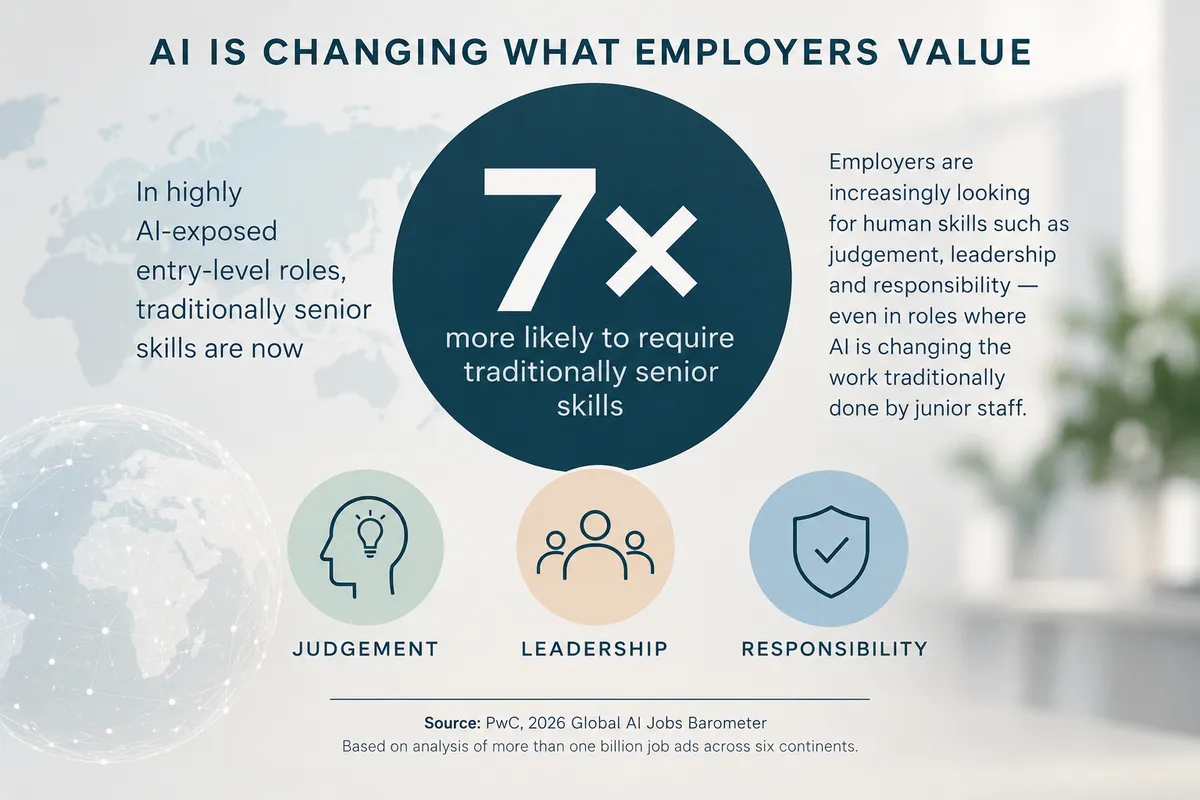
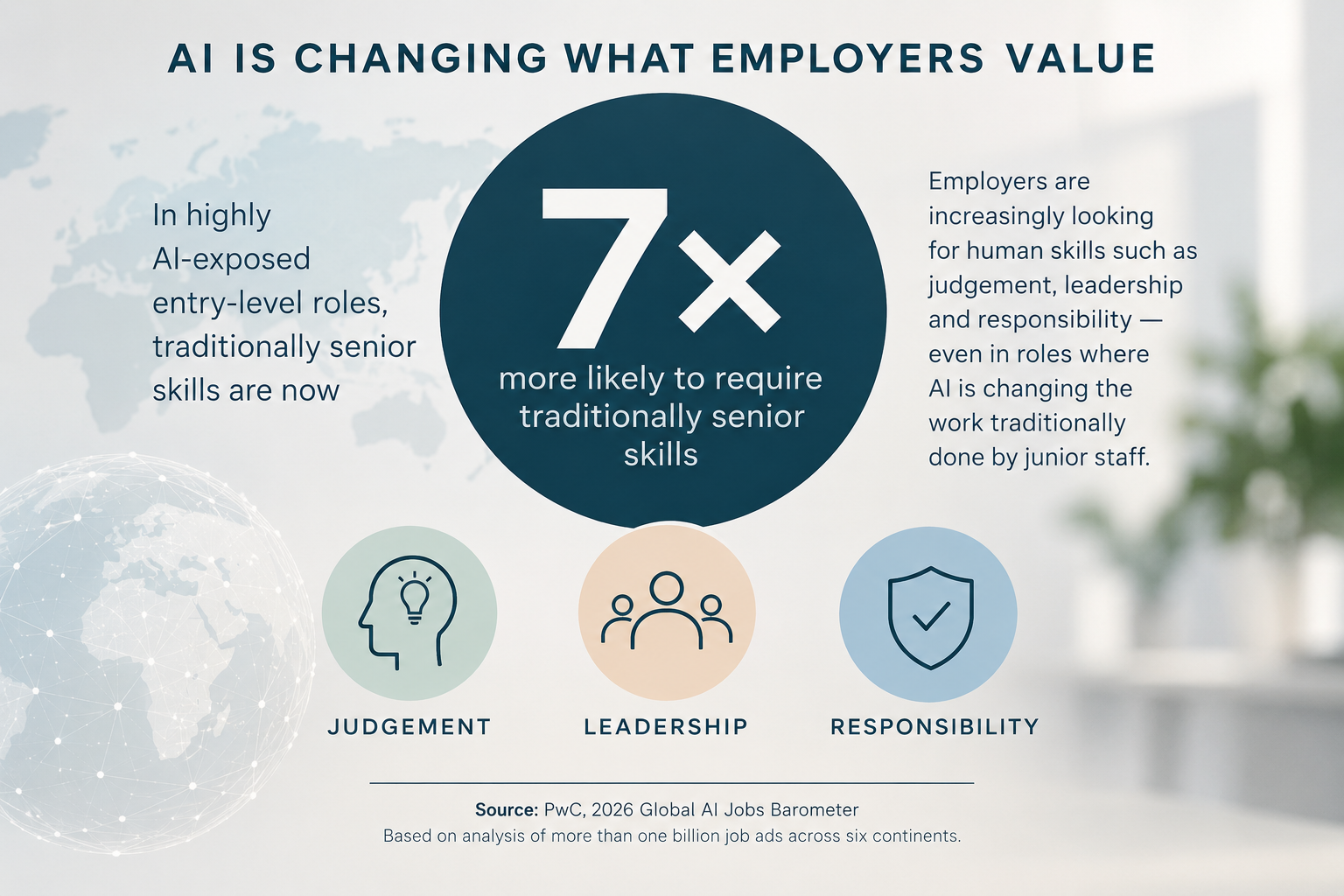
PwC's 2026 Global AI Jobs Barometer analysed more than one billion job ads worldwide — and found that AI-exposed roles are increasingly demanding human skills such as judgement and leadership. Even more striking: in highly AI-exposed entry-level roles, traditionally senior skills are now seven times more likely to be required.
Read that again. The market isn't just tolerating senior judgement in an AI-disrupted world — it's actively asking for more of it, in places it never used to.
What This Actually Means If You've Built a Career Over 20+ Years
If you're a resourceful professional in your 40s or 50s, this data point matters more than any generic "don't worry about AI" reassurance. It means the years you've spent making calls under pressure, reading a room, knowing when to push and when to hold — none of that becomes obsolete just because a machine can draft an email or summarise a contract faster than you can.
This doesn't mean nothing changes. Roles will shift. Some will disappear. New ones will form around exactly this gap — the human ability to decide, lead, and take responsibility for outcomes in ambiguous situations. This can be an identity challenge. That's a market signal pointing directly at what you already have.
Why This Feels Bigger Than "Just a Job Question"
Here's what the data doesn't capture, but what most of us feel: when your profession is threatened, it doesn't just feel like a career problem. It feels like an identity problem. If you spent two decades becoming excellent at something, and now you're watching the ground shift under that expertise, the anxiety isn't really about the job. It's about who you are without it.
That's a completely normal response to disruption — not a sign something is wrong with you. It's the first stage of a process that has a name, a shape, and a way through it. (If you want to understand exactly where you are in that process, The Reinvention Assessment takes two minutes and names what's actually driving your need for change.)
So What Do You Actually Do With This?
Not panic. Not pivot overnight. The PwC findings are permission to slow down and ask a better question than "will I be replaced?" — namely: where does my judgement already outperform what AI can do, and how do I make that visible?
That's a very different starting point than fear. It's an inventory, not an emergency.
Take two minutes to find out exactly what's driving your need for change — The Reinvention Assessment gives you a personalised read on where you are in this process, no assumptions made about where you'll land.